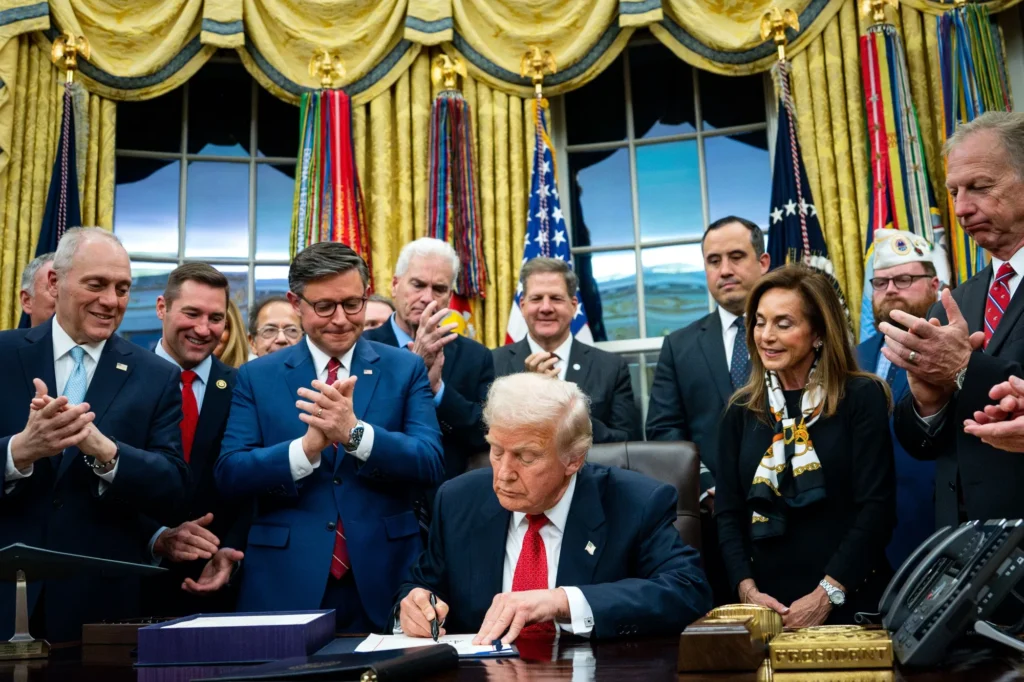
On November 12 2025, the federal government of the United States reopened after a historic 43-day shutdown — the longest in U.S. history. President Donald Trump signed a funding bill late that evening, ending the stalemate that began in early October.
This moment marked relief for hundreds of thousands of federal workers, families relying on government services, and industries hit hard by the freeze.
What Happened
- The shutdown began when Congress failed to pass appropriations or a continuing resolution to fund large portions of the government.
- After weeks of negotiation, the Senate approved a funding deal on November 10, followed by the House passing it on November 12 with a 222–209 vote.
- Hours later, President Trump signed the legislation, officially reopening government operations.
- The funding bill extends many agencies’ operations until January 30, 2026, and includes full-year funding for some departments.
Who Was Impacted
- Around 670,000 federal employees were furloughed during the shutdown, while another roughly 600,000 had to continue working without pay.
- Critical services were disrupted: food assistance programs delayed, airport and air-traffic staffing strained, federal loan and benefits systems slowed.
- The economic cost was substantial: analysts estimate billions of dollars lost in productivity and delayed economic data, which complicates policy making.
Why It Happened
- The root cause: a partisan stalemate over budget priorities. Key disagreements included health-insurance subsidy extensions under the Affordable Care Act (ACA), among other issues.
- Republicans and Democrats blamed each other publicly. President Trump said during the signing: “This is no way to run a country.”
- Some lawmakers likened the shutdown to a chaotic TV episode, reflecting frustration even within parties.
What the Deal Includes
- Funding until January 30 for most departments; full-year funding for agriculture, military construction and the legislative branch.
- Guaranteed back pay for furloughed employees and reinstatement of workers who were facing layoffs.
- Restoration of programs like SNAP (food stamps) and stabilization of food-assistance flows through the holiday season.
- However, the deal did not include an extension of ACA subsidies, a major Democratic demand. A standalone vote is expected later.
Implications
- For workers and citizens: The reopening means many workers will soon receive back-pay, and essential services will gradually resume.
- For the economy: Restoration of data flows, travel operations and aid programs are positive for consumer confidence and business activity. But some damage may be irreversible.
- For politics: The shutdown, and its end, will likely shape voter perceptions ahead of the 2026 midterms. President Trump and Republicans are trying to portray this as a win; Democrats view the unfinished business (health-care subsidies) as the next battleground.
- For future budget fights: The January deadline signals that fiscal tensions remain. Without a longer-term deal, another shutdown possibility looms.
What to Watch Next
- Will Congress follow through on the promised vote on ACA subsidies? And what will come of that?
- How quickly will federal agencies restore full operations (especially travel/air traffic, benefits processing, etc.)?
- How will the public and the voters evaluate blame and responsibility from both parties? Polls showed nearly even blame assigned to Republicans and Democrats.
- What will be the long-term impact on federal employee morale and retention, given the strain of extended closures?
After 43 tumultuous days, the U.S. government is back in business — but the shutdown’s legacy remains. The care rift over health-care subsidies, stresses on federal workers, and economic ripple effects will continue to reverberate. President Trump’s signing of the deal marks a pause, not an end, to the broader budgetary and partisan battles in Washington.