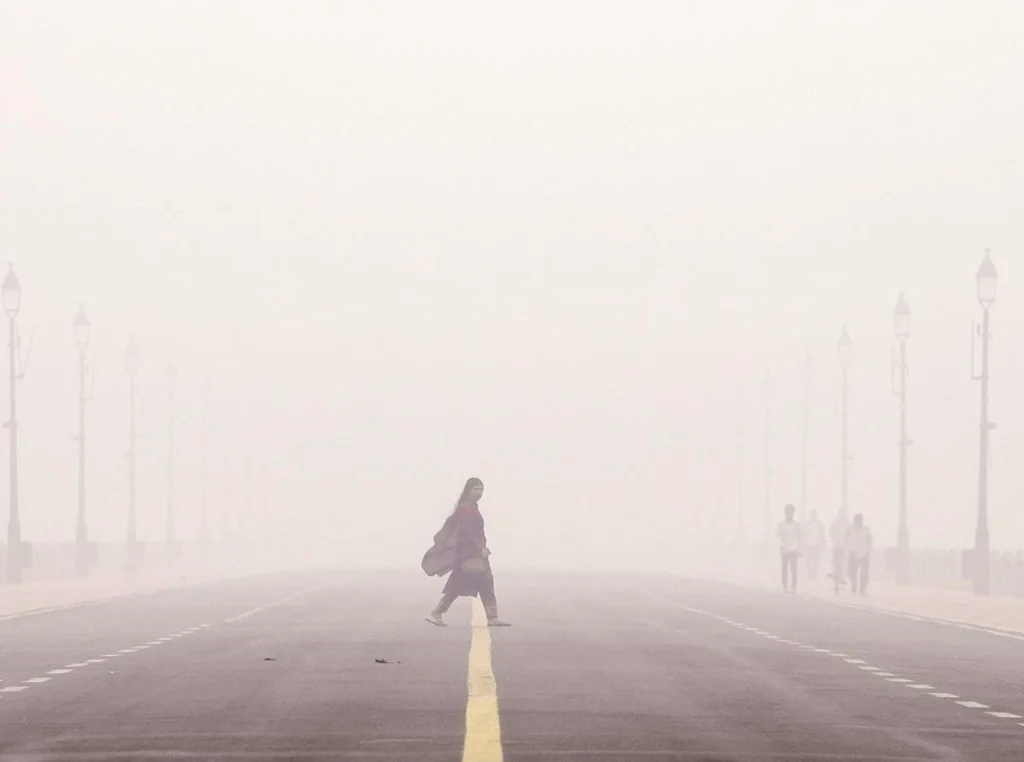
A severe air-quality crisis in the national capital has prompted significant judicial and governmental interventions as the Supreme Court of India (SC) voiced grave concern over the health and environmental implications of the smog enveloping Delhi. Reuters+2The Economic Times+2
The Immediate Response
On 13 November 2025, the SC bench, led by Justice P. S. Narasimha and Justice Atul S. Chandurkar, paused courtroom proceedings and urged lawyers to use the virtual hearing facility instead of appearing in person. “Why are you all appearing here? We have the virtual hearing facility. Please avail it. This pollution … this will cause permanent damage,” Justice Narasimha remarked during the hearing. The Star+1
The Air Quality Index (AQI) in New Delhi spiked to 437 near the Supreme Court premises, a level classified as “severe” by the Central Pollution Control Board (CPCB). Reuters+1 Masks, the court noted, while helpful, are not enough to reverse long-term health damage from such pollution levels. @mathrubhumi
Underlying Causes & Judicial Probes
The court reiterated its long-standing concerns about crop-stubble burning in neighbouring states – particularly Punjab and Haryana – which has been a recurrent major contributor to Delhi’s winter smog. The SC has now asked these states to submit a status report detailing measures taken to curb burning. The Economic Times
The pattern of extremely poor air in Delhi every winter reflects systemic enforcement delays. Despite longstanding directions, the court noted the lack of consistent compliance with environmental safeguards. The Tribune
Implications & Why It Matters
- Health hazard escalation: With AQI in the “severe” category, long-term exposure even for healthy individuals risks respiratory and cardiovascular damage—something the SC explicitly flagged.
- Judicial activism: The SC’s demand for virtual hearings marks a rare direct intervention in daily-life implications of pollution and signals that legal institutions recognise environmental issues as urgent governance problems.
- State accountability: By mandating reports from Punjab and Haryana, the court is emphasising that combatting pollution is not merely a Delhi problem but a regional coordination issue.
- Policy rhetoric vs delivery: The recurring smog crisis is a litmus test for environmental governance structures. The continuing cycle of “severe pollution → emergency curbs” suggests that long-term structural change is still lacking.
What to Watch Moving Ahead
- Will the states of Punjab, Haryana and Delhi submit the required reports in the timeline set by the court, and what substance will they contain?
- Whether Delhi and its satellite regions will see actual enforcement of “Graded Response Actions” (GRAP) ahead of full-scale winter smog.
- If the judiciary begins to impose stricter deadlines or penalties in future for non-compliance in environmental regulations.
- How public institutions (schools, courts, public transport) will adjust to recurring pollution peaks—could we see more remote/virtual routines in non-pollution seasons too?
For more updates on politics and sports, watch other stories at Savanka News.