What Happened
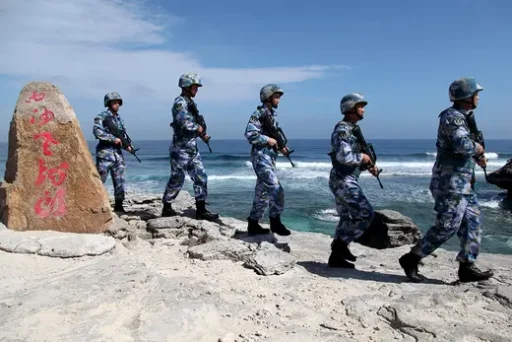
- China’s coastguard carried out patrols around the Diaoyu/Senkaku Islands, which are claimed by both China and Japan. Financial Times
- The move follows hawkish rhetoric from Japan’s newly installed Prime Minister Sanae Takaichi, signalling a firmer stance on national sovereignty. Financial Times
- Diplomats in Tokyo warn that there is currently no viable diplomatic “off-ramp” — i.e., no easy way to de-escalate the situation without one side appearing weak. Financial Times
Why It Matters
Regional Security
The Asia-Pacific region is already a hotspot for strategic competition (U.S., China, Japan, Taiwan). Escalation here could trigger military posturing or unintended incidents at sea. The lack of a diplomatic off-ramp heightens this risk.
Trade & Economies
China and Japan are major trading partners and key players in global supply chains. Any disruption—through sanctions, increased maritime risk, or shifts in alliances—could ripple through markets worldwide. Financial Times
Strategic Signalling
- For China: The patrol can be seen as asserting its claims and testing Japan’s commitments and responses.
- For Japan: A more hawkish leader signals to both domestic and international audiences that it may not cede any ground on sovereignty.
- For others (U.S., ASEAN, etc.): Observers will gauge whether this conflict could draw in alliances or become a precedent for other territorial disputes.
Immediate Implications
- Diplomatic relations between China and Japan are likely to experience a strain, with potential suspensions or reductions of cooperation in areas like trade, environment or defence.
- Maritime activities (shipping lanes, fishing, resource exploration) in the East China Sea may face greater risk or increased monitoring.
- Markets and investors will monitor China’s next moves closely — both economically (e.g., foreign investment inflows) and geopolitically (e.g., links to Taiwan, U.S.). Financial Times
What to Watch Next
- Official responses from China and Japan — Will either side invoke international mediation, impose economic measures or deploy naval assets?
- Third-party reactions — Especially the U.S. and regional players like ASEAN countries; whether they pick a side or call for restraint.
- Economic signals — Any sanctions or trade disruptions will send warnings to global markets, especially in sectors tied to East Asian manufacturing and shipping.
- Risk of escalation — Whether the maritime patrol leads to a standoff, accident or incident at sea which could trigger broader conflict.
Why This Story Matters to Indian Readers
From an Indian perspective:
- As an emerging global power, India closely watches balance-of-power shifts in the Asia-Pacific region. The China-Japan standoff affects strategic equations with China.
- Indian businesses and supply chains are integrated with East Asia; disruptions there could have downstream impacts in India (imports/exports, shipping costs).
- The story reflects the increasing role of territorial, maritime and resource disputes in modern geopolitics — themes relevant to India’s own regional context.
Conclusion
While the recent coastguard patrol might on the surface seem like a routine maritime operation, it signals much deeper undercurrents of strategic competition between China and Japan. With no easy diplomatic exit so far, this situation could become a defining Asia-Pacific flashpoint. For readers, the key question becomes: how will this evolve — gradual tension or sudden incident — and what will it mean for global geopolitics and economies?