
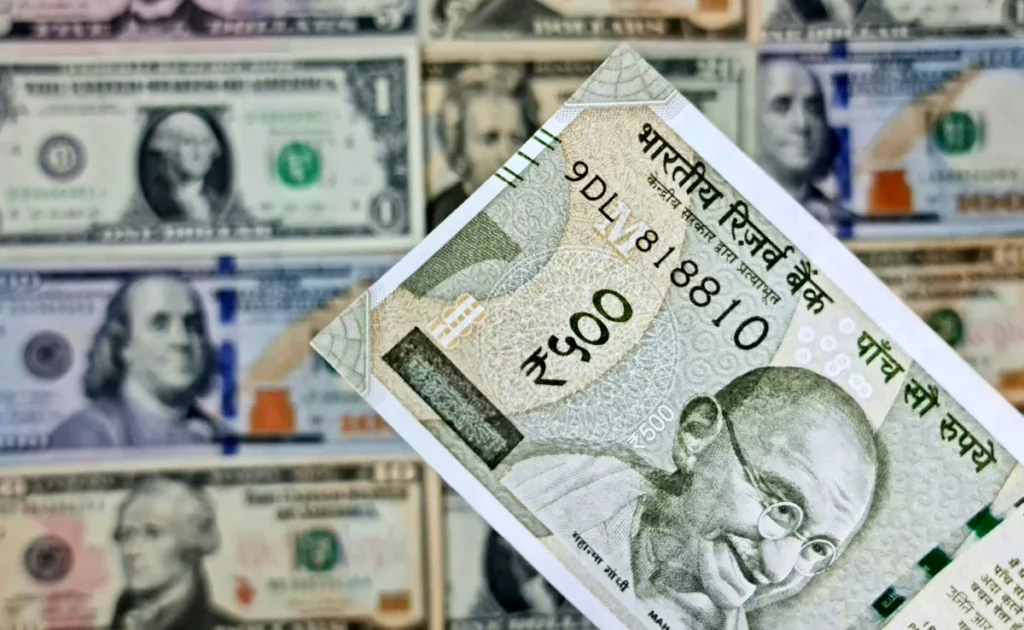
- Global dollar strength & interest rates: A stronger U.S. dollar (and higher interest rates abroad) draws global investors away from emerging markets, including India — increasing demand for USD, and weakening the rupee.
- Rising import bills — especially oil: India imports a large share of its energy and goods. When oil prices rise, more dollars are required — trading at higher USD demand pushes INR down. money2india.com+1
- Capital outflows and slowing foreign investment: When foreign investment slows or reverses, fewer dollars are converted to rupees — reducing demand for INR. EBC Financial Group+1
- Structural inflation and long-term trends: Over decades, due to higher inflation in India compared to developed economies, the rupee has steadily lost value against the dollar. The Financial Express+1
🔄 What Happens When ₹ Weakens vs USD
| Effect | Who gains / loses |
|---|---|
| Exports become more profitable (in ₹) | Sectors earning in USD — like IT, pharmaceuticals, chemicals — benefit when they convert foreign earnings into rupees. onedemat.com+1 |
| Imported goods and fuel become costlier | Everyday products, fuel, electronics, machinery and raw materials — their prices rise, contributing to inflation. ICICI Direct+1 |
| Imported inflation squeezes households | Higher cost of fuel → transportation → food & essentials. Household budgets get tighter, especially for lower and middle-income families. |
| Foreign investment becomes less attractive | For foreign investors, returns shrink when converted back to dollars — sometimes leading to capital outflows, weakening INR further. ICICI Direct+1 |
🧮 What ₹ = 90 Means in Real Life
- Everyday goods, imported products, fuel — all get more expensive. If you buy items priced in dollars (directly or via import), your cost in rupees goes up.
- Families planning overseas education, travel, or remittances will feel the pinch — because every dollar they need costs more rupees.
- For Indian exporters and firms earning in foreign currency — especially IT and pharma — revenue (in rupees) improves, which can be a boon.
- On macro level — inflation may creep up, imports get costlier, and the cost of energy & raw materials can rise, which can ripple across the economy.
✅ Is There Any “Good” Side?
Yes — a weaker rupee can help boost exports and make the “Made in India” products cheaper for foreign buyers. Industries that earn in dollars get more rupees per dollar. onedemat.com+1
That said — for consumers, import-dependent businesses, students abroad, and anyone buying imported goods — it often hurts more than helps.
🧐 What to Watch in Future

- Global oil prices and global dollar strength: If oil prices or global dollar demand rise — rupee could weaken further.
- Foreign investment flows: More FDI/FPI into India would strengthen demand for rupees and could stabilise INR.
- Domestic inflation, trade deficit, and government/central bank policies — all influence how far rupee falls or recovers.
📌 In Short
When you hear “1 USD = ₹90” — it isn’t just a number. It signals rising costs for everyday items, a heavier wallet burden, but possibly better opportunities for exporters or those earning in foreign currency.