
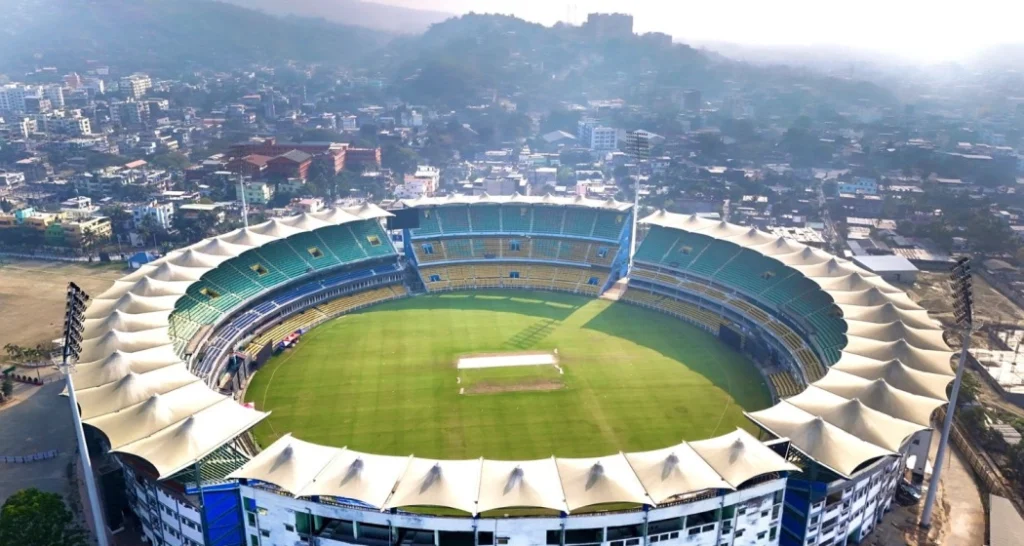
On 22 November 2025, the Barsapara Stadium in Guwahati marked a landmark moment by becoming India’s 30th official Test-venue. The Times of India
The opening day ceremony featured Board of Control for Cricket in India (BCCI) President Mithun Manhas and Honorary Secretary Devajit Saikia ringing the traditional bell and presenting memorial toss coins to formally begin the match. The Times of India
Significance of the Venue
- Guwahati now joins the elite list of Indian cities that host Test-cricket, underlining the BCCI’s expanding vision of bringing elite cricket venues to newer regions.
- The move can boost sports infrastructure, regional economic activity and local enthusiasm for the game in Assam and the northeastern region.
- It sends a message about decentralising top-tier cricket beyond the traditional metros and cricket-hubs.
What It Means for Indian Sport
- Athletes and fans in Assam and neighbouring states gain direct access to international-level matches without travelling far.
- Local infrastructure improvements (stadium upgrades, transport, hospitality) often accompany such decisions—potentially leaving a lasting legacy.
- The step may encourage younger talent in the region, seeing that global-level sport can be hosted in their backyard.
- Strategically, this aligns with India’s ambition to host more international series, possibly spreading across tier-2 / tier-3 cities.
Challenges & Considerations
- Ensuring that the facility meets all Test-match standards (pitch quality, spectator amenities, broadcast infrastructure, security).
- Maintaining high attendance, local engagement, and ongoing maintenance to justify the venue’s status.
- Integrating the international schedule without overwhelming the local ecosystem—balancing domestic leagues, local tournaments and international fixtures.
- Ensuring sustainability: not just a one-off event, but continuous usage, linking into sports culture and local economic benefits.
Looking Ahead
- With Guwahati now in the fold as a Test venue, next questions include: which other Indian cities will follow?
- How the BCCI, state government, and local stakeholders will collaborate to build up the sports ecosystem in the region.
- Whether this leads to increased investment in grassroots cricket in Assam, youth academies, local leagues tied to the venue’s presence.
- The impact on broadcasting, tourism, local business and how the region leverages this milestone for broader development.
In Summary
The inauguration of Guwahati’s Barsapara Stadium as India’s 30th Test-venue is more than a sporting footnote—it signals a strategic expansion of Indian cricket into newer geographies, offers growth opportunities for the region, and sets a bigger stage for the sport’s future in the country. It will be interesting to watch how this plays out in terms of regional upliftment, local talent development and India’s hosting ambitions.
Read more at Savanka News