
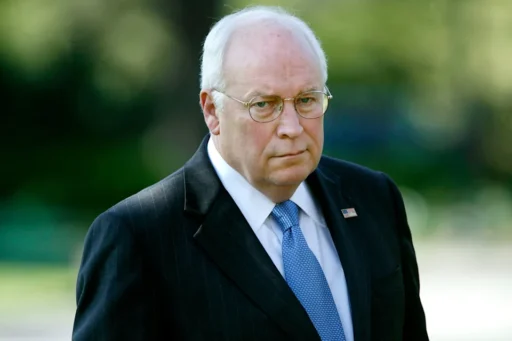
In a pointed public remark, U.S. Senator (and potential vice-presidential contender) J.D. Vance stated that former Vice President Dick Cheney “did the job … not very well.” This blunt assessment has stirred political commentary and reopened questions about Cheney’s legacy, particularly his role during the early 2000s.
What Did Vance Say?
At a recent event, Vance declared that Cheney’s tenure as vice-president was lacking:
“He did the job … not very well.”
While the full context of Vance’s remark was brief, it underscores a larger rhetorical shift: Vance appears willing to challenge established Republican figures rather than defer to them.
Why This Matters
- Republican generational shift – Vance’s critique reflects a younger or newer wing of the party willing to reassess past leadership.
- Legacy of Cheney – Cheney’s influence, especially on foreign policy and national security, has been under scrutiny for years.
- Intra-party dynamics – The comment signals potential tension between traditional GOP hawks (with whom Cheney is associated) and more populist or isolationist wings (with which Vance aligns).
Cheney’s Legacy: The Broad Strokes
- Dick Cheney served as Vice President under President George W. Bush from 2001-2009.
- He remains a controversial figure: praised by supporters for strength and resolve; criticised for his role in the 2003 Iraq War and use of “enhanced interrogation techniques”.
- His brand of executive-branch power and foreign interventionism stands in contrast to the “America First” or non-interventionist tilt of newer Republican figures.
Vance’s Perspective and Political Positioning
- J.D. Vance has emerged as a prominent Republican voice who is skeptical of both the old neoconservative foreign-policy model and some traditional party hierarchies.
- By publicly criticising Cheney, Vance may be aligning himself with the changing interests of the party base — one that is more nationalistic, more questioning of foreign entanglements, and more willing to take on the party elite.
- Vance’s comment can be seen as shorthand for: “We need new types of leadership for new times,” rather than simply an attack on Cheney personally.
How the Comment Resonates
- Symbolic moment: The remark functions as a signal to younger voters and activists that established figures may no longer be beyond critique.
- Media dynamics: Analysts are interpreting Vance’s statement as part of a broader rewrite of 21st-century GOP history — questioning the choices that shaped the Iraq War, big government security apparatuses, and the accumulation of executive power.
- Policy implications: If Vance’s viewpoint gains traction, we may see policy debates that shift away from Cheney-era paradigms (e.g., large-scale regime change) toward more restraint.
Potential Fallout & Reactions
- Cheney’s defenders will likely push back, citing his long record, leadership during crisis, and role in key national-security decisions.
- Some Republican traditionalists may view Vance’s remark as a betrayal of party consensus or as undermining unity.
- Vance’s supporters may view the remark as refreshing — a break from revering historical figures without critique.
- Broader public discourse might revisit questions of how to evaluate past leadership: by outcomes, by context, or by enduring values.
J.D. Vance’s pointed assessment of Dick Cheney’s performance—“not very well”—is more than a snarky asides. It reflects a transitional moment in American conservative politics: a moment of generational turnover, reassessment of legacy, and shifting priorities. Whether one views Vance’s comment as audacious or disrespectful, it undeniably contributes to the ongoing conversation about how we judge our leaders, past and present.