

Death is the greatest mystery of life — something every human faces, yet no one can fully explain. When the body stops breathing and the heart stops beating, what happens to the soul? Does it simply vanish, or does it travel to another world beyond our senses?
For centuries, religions, philosophers, and scientists have tried to answer this profound question. Let’s explore what different beliefs and experiences tell us about where the soul goes after death.
✨ The Soul: The Eternal Energy Within
Every tradition agrees on one thing — the soul is not the body. It is the energy, the consciousness, the essence of who we truly are. The body is temporary, but the soul is eternal.
As ancient Indian scriptures say:
“The soul is neither born nor does it die.” — Bhagavad Gita
When we die, our physical body returns to nature — to earth, water, air, and fire. But the soul continues its journey, carrying the record of all our actions, emotions, and experiences.
🕊️ Different Beliefs About the Soul’s Journey
1. Hinduism: The Cycle of Rebirth (Reincarnation)
According to Hindu philosophy, the soul goes through endless cycles of birth, death, and rebirth — known as samsara.
Our actions (karma) decide our next life. A soul that achieves spiritual liberation (moksha) escapes this cycle and merges with the Divine.
The soul doesn’t die — it simply changes bodies, like changing clothes.
2. Christianity: Heaven, Hell, and Eternal Life
In Christian belief, the soul faces judgment after death. Those who lived in faith and goodness ascend to Heaven, a place of peace and reunion with God. Others, depending on their deeds, may face Hell or purification in Purgatory.
3. Islam: The Barzakh and the Day of Judgment
In Islam, after death, the soul enters a state called Barzakh, an unseen realm where it awaits the Day of Judgment. On that day, all souls are resurrected and judged by Allah, leading to eternal reward or punishment.
4. Buddhism: The Path of Enlightenment
Buddhists believe in rebirth — not of a permanent soul, but of consciousness. The cycle of rebirth continues until one achieves Nirvana, a state of ultimate peace and liberation from suffering.
5. Scientific and Spiritual Perspectives
Science sees death as the end of biological function. However, many scientists and researchers studying near-death experiences (NDEs) have found remarkable stories — people describing tunnels of light, peace, and the presence of loved ones who passed away.
These experiences hint that consciousness may continue even after the body stops functioning.
🌠 The Soul’s Journey After Death
Though no one can definitively map the journey of the soul, many spiritual texts and meditative experiences describe a process:
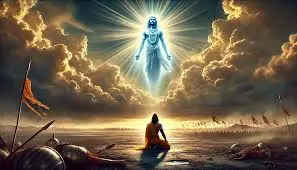
- Separation: The soul leaves the body and witnesses it from above.
- Transition: The soul moves through a tunnel or light, guided by divine beings or ancestors.
- Reflection: Life events replay — the soul feels every emotion it caused others.
- Rest or Renewal: Depending on karma, the soul either rests in peace or prepares for another birth.
Some souls may linger briefly near their loved ones, while others move quickly toward the next stage of existence.
💫 Why Understanding Death Brings Peace
When we realize that death is not the end, but a transformation, fear begins to fade. It reminds us to live consciously — with kindness, love, and truth — because every action echoes in the journey of our soul.
As one spiritual teacher said:
“We are not human beings having a spiritual experience. We are spiritual beings having a human experience.”
The mystery of where the soul goes after death may never be fully explained — but perhaps it’s not meant to be.
It invites us to live more deeply, love more freely, and seek connection beyond the material world.
Whether one believes in heaven, reincarnation, or cosmic energy — one truth unites all faiths and philosophies:
The soul is eternal.
It may leave the body, but it never disappears. Death is not an ending — it’s a return home.