
🧭 What’s Happening?
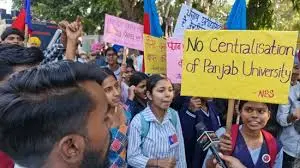
Students of Panjab University, Chandigarh are protesting against recent changes to the university’s governance structure.
Here are the key points of contention:
- On 28 October 2025, the Central Government issued a notification altering the university’s governing bodies—reducing the size of the Senate, modifying the Syndicate, and changing how members are selected.
- The students, under the banner “Panjab University Bachao Morcha” (Save PU Front), demand the immediate announcement of election dates for the full Senate and restoration of democratic processes.
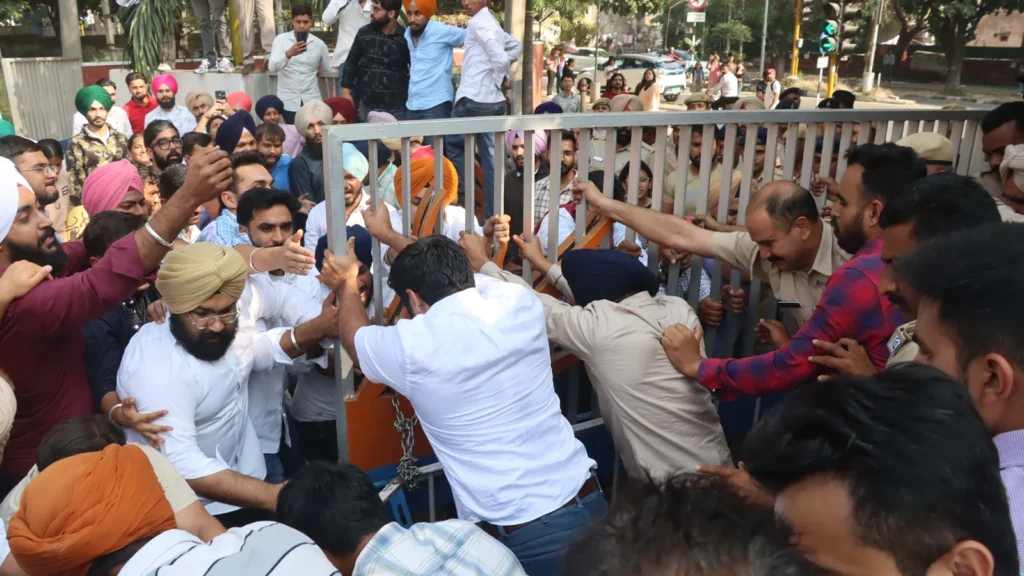
- The protest escalated: barricades were broken, Gate No 1 of the campus was breached by around 2,000–3,000 protesters, and police responded with lathi-charge to regain control.
🎯 Why They’re Protesting
The students argue that:
- The governance changes undermine the autonomy of Panjab University. The university has long been a legacy institution with roots in Punjab’s academic history.
- The reduction in the Senate (from 91 to 31 members) and removal of certain elective processes means less representation for alumni, students and regional constituencies.
- Some decisions (like asking first-year students to sign “no-protest” affidavits) are seen as attempts to crack down on student voice and dissent.
🛑 What Has the Administration Done So Far
- After mounting pressure, the Ministry of Education withdrew the October 28 notification on 7 November. But student leaders say the changes have not been fully reversed—they demand clear timelines for elections and full restoration of processes.
- The university’s Vice-Chancellor stated that the administration respects students’ right to protest, but also emphasised that academic activities must continue.
🎙 What the Students & Supporters Say
“We will continue the sit-in until the election schedule is announced.” — Student leader at PU protest.
“This is not just a student issue — it is about the autonomy of Punjab’s oldest institution.” — Farmer-leader supporting the protest.
🔍 Implications
- For students: Disruptions in campus movement, classes and exams are possible while the protest continues.
- For the university: Reputation and governance may be impacted if the standoff persists.
- For Punjab’s politics: The matter has become a political flash-point, with several parties accusing the Centre of overreach.
✅ Bottom Line
The protest at Panjab University is more than just a student demonstration—it represents a fight for institutional autonomy, democratic governance of a historic university, and regional identity in education. The key demand: hold timely and transparent Senate elections, and ensure that any structural changes genuinely include stakeholder participation.