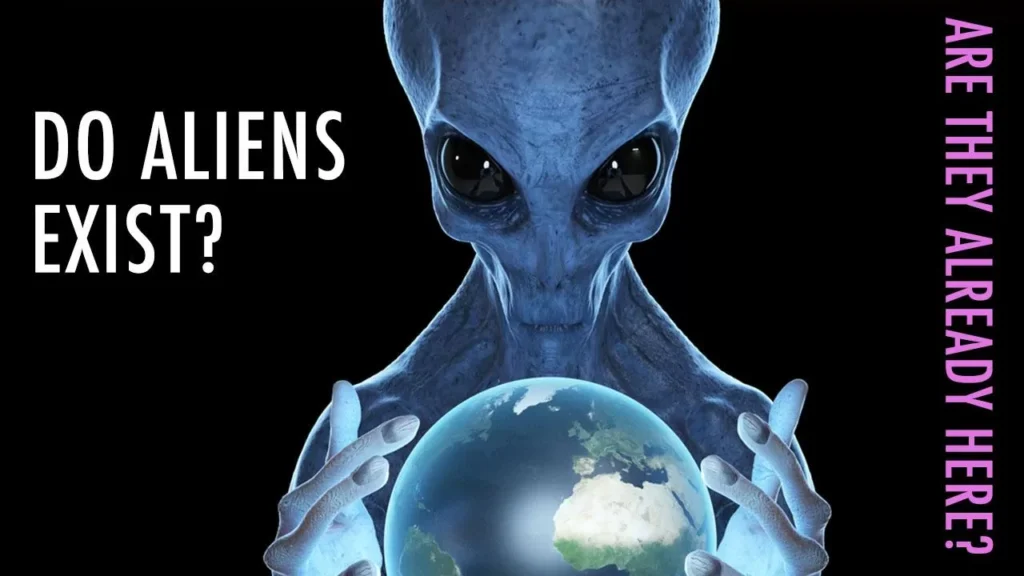
For centuries, humans have looked up at the night sky and wondered: Are we alone in the universe?
From ancient legends to modern science, the question of alien life has fascinated everyone — from philosophers to astrophysicists.
Let’s explore what science actually says about the existence of aliens — the evidence, the theories, and what the future might reveal.
1. The Universe Is Too Big for Us to Be Alone
The observable universe contains more than 200 billion galaxies, each with billions of stars. Many of those stars have planets — called exoplanets — orbiting around them.
According to NASA’s Kepler mission, there could be over 300 million Earth-like planets in our galaxy alone.
With so many worlds out there, it’s statistically hard to believe life only formed on one — Earth.
Scientists call this reasoning the Copernican Principle: Earth is not special; it’s just one of countless worlds where life could arise.
2. The Conditions for Life Are Common
Life as we know it needs three main ingredients:
- Liquid water
- Energy (like sunlight or geothermal heat)
- Essential elements (carbon, hydrogen, oxygen, nitrogen)
These ingredients are found not just on Earth but throughout the cosmos:
- Mars once had rivers and lakes.
- Jupiter’s moon Europa and Saturn’s moon Enceladus have oceans beneath their icy crusts.
- Even some exoplanets show signs of atmospheres that could support life.
If the building blocks of life are everywhere, it’s possible life could have started elsewhere too — maybe in forms very different from ours.
3. The Fermi Paradox: If Aliens Exist, Where Are They?
Physicist Enrico Fermi once asked a famous question:
“If the universe is full of life, where is everybody?”
This puzzle is called the Fermi Paradox.
There are several scientific explanations for why we haven’t met aliens yet:
- Distance: Space is enormous; it could take thousands of years to communicate.
- Time: Civilizations might rise and fall before we ever cross paths.
- Silence: Intelligent life might avoid contact — or use technology we can’t detect.
- Rarity: Life could be extremely rare, even in a vast universe.
So, maybe we’re early — or maybe we just haven’t learned how to listen yet.
4. UFOs, UAPs, and Modern Investigations
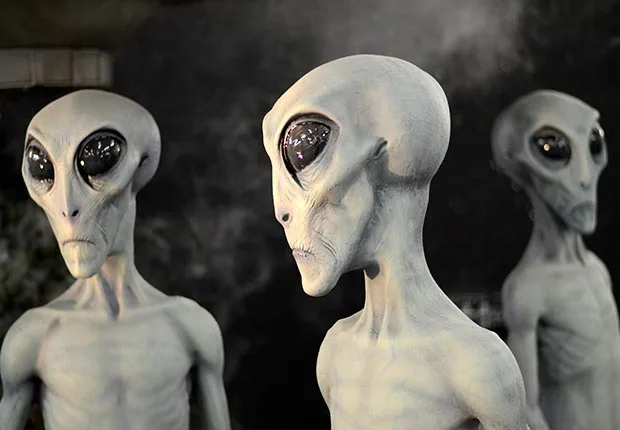
In recent years, governments and scientists have shown renewed interest in UFOs — now called UAPs (Unidentified Aerial Phenomena).
The U.S. Department of Defense and NASA have both studied mysterious aerial sightings.
While most turn out to be human-made objects, drones, or atmospheric effects, a few remain unexplained.
However, unexplained doesn’t mean alien — it just means we need more data.
Science demands evidence, and so far, we haven’t found concrete proof of extraterrestrial visitors.
5. The Search for Life Continues
Projects like SETI (Search for Extraterrestrial Intelligence) and the James Webb Space Telescope are helping scientists look deeper into space than ever before.
SETI listens for radio signals from other civilizations, while telescopes analyze exoplanet atmospheres for signs of biosignatures — gases like oxygen or methane that could indicate life.
In the near future, NASA missions to Mars, Europa, and Titan may finally answer the question: Are we alone?
What the Future Might Reveal
Many scientists believe it’s only a matter of time before we discover microbial life — tiny organisms — beyond Earth.
Finding intelligent life, however, is a much bigger challenge.
As our technology improves, we may one day detect signs of civilizations light-years away — or realize that we are truly rare in the cosmos.
Either way, the search itself connects humanity to something greater — the vast, mysterious universe we call home.
Right now, science hasn’t found direct proof of aliens — but the odds favor their existence somewhere in the universe.
With billions of stars and countless planets, life may not just be a miracle — it might be a natural part of the cosmic story.
Until we know for sure, the question “Do aliens exist?” remains one of the most thrilling mysteries of all time.