
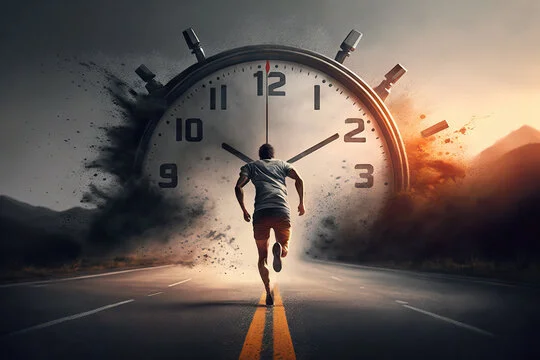
Have you noticed that the older you get, the faster life seems to go? Childhood summers felt endless, but now years pass in the blink of an eye. This isn’t just your imagination — science has several explanations for why time feels like it’s running faster.
The Brain’s Processing Speed Slows Down
Neuroscientists say our perception of time depends on how quickly our brain processes information.
- When we’re young, our brains process new sights, sounds, and feelings rapidly.
- As we age, that processing slows down — meaning we record fewer new experiences per second.
This makes time seem to pass faster because the brain stores fewer “mental snapshots.”
In short: the fewer memories you make, the shorter time feels.
The Proportional Theory: Each Year Shrinks in Size
Psychologists call this the proportional theory of time perception.
Each year feels shorter because it becomes a smaller part of your total life.
- For a 5-year-old, one year is 20% of their life.
- For a 50-year-old, one year is only 2%.
So, while a year is the same length physically, our brains compare it to our lifespan, making it feel shorter as we age.
Repetition and Routine Compress Time
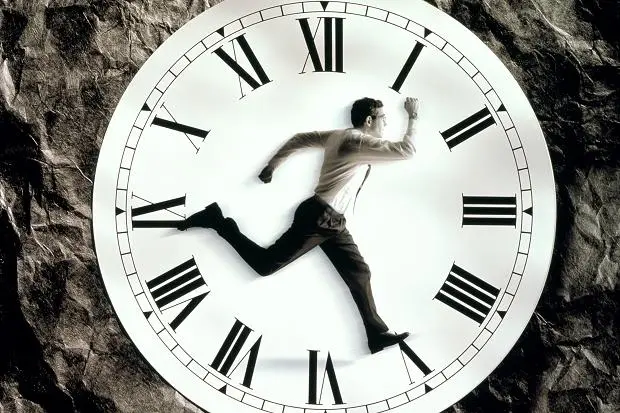
When your life follows the same patterns every day, your brain doesn’t record as much new information.
- Novel experiences (travel, learning, challenges) create strong, detailed memories.
- Repetitive days (commuting, working, scrolling) blend together, making months disappear quickly in hindsight.
Scientists call this the “holiday effect” — time feels slower during vacations because your brain is busy absorbing new things.
The Attention and Emotion Effect
Time perception also depends on where your attention goes and how emotional your experiences are.
- When you’re highly focused or stressed, your brain releases more dopamine and norepinephrine, which can distort your sense of time.
- In emergencies, time seems to “slow down.”
- But in fast, distracted lifestyles, your brain doesn’t fully register moments — so time seems to “speed up.”
Our attention span, shortened by digital devices, also plays a big role. Constant multitasking and quick scrolling make the brain feel like life is racing by.
Technology and the Modern Time Trap
Today’s world runs faster than ever — not in physics, but in mental speed.
- Instant notifications, social media updates, and endless online content flood our brains.
- This constant stimulation leaves no pause between experiences.
Cognitive scientists call this “temporal compression” — our minds have less downtime to process memories, so days blend together more quickly.
Can We Slow Down Time?
While we can’t change physics, we can change perception.
Research in psychology and mindfulness shows that we can stretch our experience of time by:
- Practicing mindfulness or meditation to increase awareness.
- Breaking routine — trying new hobbies, travel, or challenges.
- Spending more time in nature, which naturally calms the brain’s clock.
- Limiting screen time to reduce cognitive overload.
These habits create more “mental markers,” which make time feel fuller and slower.
With AI, automation, and digital dependency growing, the future may feel even faster — unless we consciously slow down.
Science suggests that the more stimulation we experience without reflection, the more our subjective time will shrink.
The key is balance: technology for efficiency, mindfulness for presence.
Time isn’t physically speeding up — our brains are.
Understanding how perception works helps us take control of how fast life feels.
By living consciously, embracing novelty, and disconnecting from the digital rush, we can make every moment feel meaningful again.